How to evaluate detergent performance
Foam appearance alone does not measure cleaning power; testing should match real use.
Read article
Degreasing requires understanding oil type, surface and application method.
← Back to insights
Degreasing requires understanding oil type, surface and application method.
Machining oils, heavy greases and industrial residues differ in composition and adhesion. Metals, coatings, seals and polymers also have different chemical sensitivities. Define soil, substrate and application method before choosing surfactants or alkalinity; a cleaner might remove oil from one metal yet damage a nearby coating.
Each application brings different contact time, mechanical action, foam and exposure conditions. Compare matched samples at controlled dose, temperature and time, checking oil residue and surface condition. Protective measures, ventilation, storage and waste-handling instructions must reflect safety data sheets and actual risk assessments. The word “industrial” never implies unrestricted use.
For machining-oil removal, define the metal, oil and application method before testing. Compare matched pieces with controlled oil loading, using appropriate spray, immersion or wipe procedures. Inspect residual oil and any changes to metal, coatings or seals under suitable safety controls. Success on one steel sample and oil type cannot automatically be extended to every industrial grease or material.
Define manual, immersion or spray application.
Review compatibility with metals, coatings and skin.
Base dilution and safety instructions on technical assessment.
References for general scientific principles; they do not imply MS CHEM has performed tests or holds certifications.
 MS CHEM / 01
Foam appearance alone does not measure cleaning power; testing should match real use.
Read article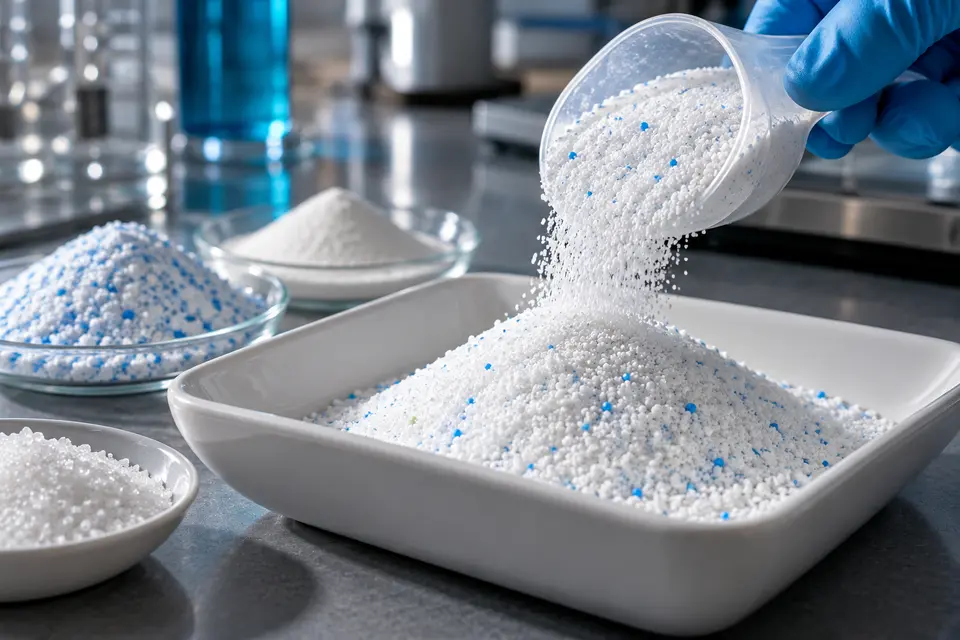 MS CHEM / 02
Powder performance depends on particle distribution, dissolution, moisture and the surfactant system.
Read article MS CHEM / 03
Fragrance is part of product experience but must work with the cleaning base and pack.
Read article