Powder detergent fundamentals
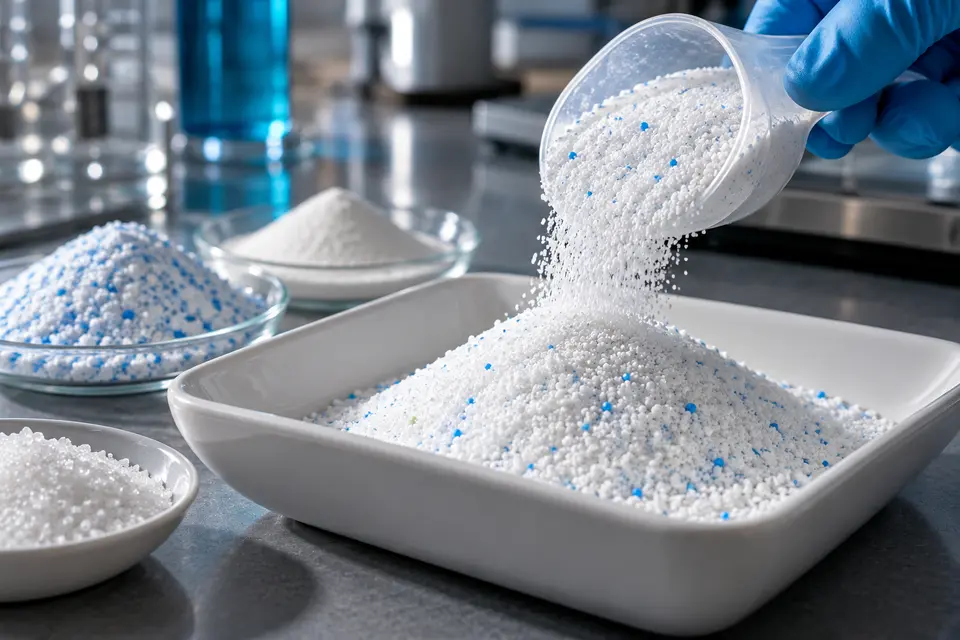
Powder performance depends on particle distribution, dissolution, moisture and the surfactant system.
Read article
Foam appearance alone does not measure cleaning power; testing should match real use.
← Back to insights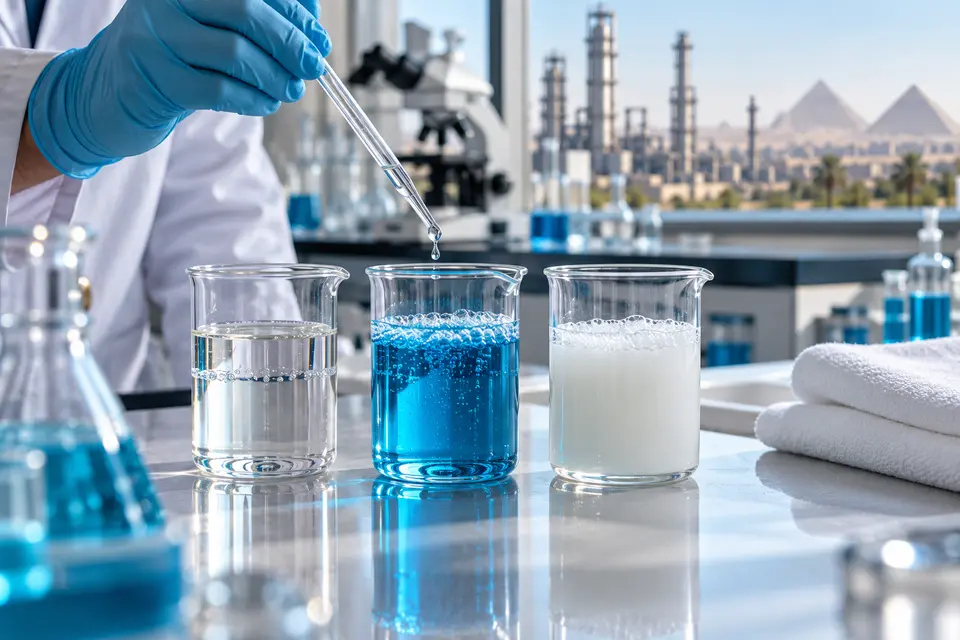
Foam appearance alone does not measure cleaning power; testing should match real use.
Detergent strength is not an absolute property that can be inferred from foam volume. Removing oil from metal differs from cleaning a fabric stain or mineral deposits on glass. Surfactants improve wetting and help detach soils, while contact time, mechanical action, temperature and water composition affect outcomes. Product evaluation must therefore begin by defining the surface, soil and use method before choosing a performance endpoint.
Prepare similar substrates with comparable soil loading, then compare a candidate with a benchmark and water-only control at equal doses and exposure times. Assess remaining soil using a suitable method and repeat trials to understand variability. Evaluate rinsing and material safety too: a cleaner may lift oil yet leave residue or affect coatings. Useful performance is a documented balance of effectiveness, cost and safety.
Imagine comparing two cleaners for removing oil from metal. Apply comparable oil loads to matched panels, then test water alone, a benchmark and a candidate at fixed doses. Keep contact time and wiping method consistent and inspect residual oil and the metal after drying. Repeat at another temperature or water hardness when relevant. This makes it possible to separate formulation effects from test conditions without using foam as the sole quality indicator. It is a proposed study, not a report of MS CHEM test results.
Define soil type, surface and water conditions first.
Use reference samples and repeatable tests.
Balance results against cost, safety and user experience.
References for general scientific principles; they do not imply MS CHEM has performed tests or holds certifications.
 MS CHEM / 02
Powder performance depends on particle distribution, dissolution, moisture and the surfactant system.
Read article MS CHEM / 03
Fragrance is part of product experience but must work with the cleaning base and pack.
Read article MS CHEM / 04
Aim for quick cleaning and minimal visible residue while considering surrounding materials.
Read article