How to evaluate detergent performance
Foam appearance alone does not measure cleaning power; testing should match real use.
Read article
Fabric softeners require careful ingredient compatibility and sensory stability.
← Back to insights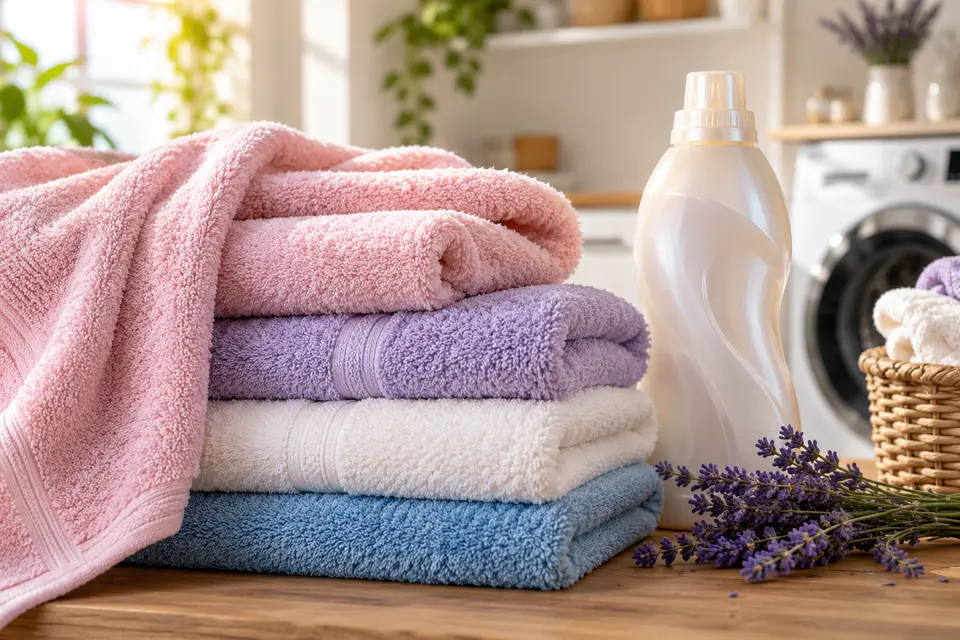
Fabric softeners require careful ingredient compatibility and sensory stability.
Certain softeners use cationic materials that interact with fibers to modify fabric feel, a function distinct from soil removal. Some untested mixtures of cationics and anionics may haze, precipitate or lose useful performance. Check real compatibility instead of assuming that separately good ingredients will make a stable blend.
Softener emulsions may be sensitive to mixing and temperature, so monitor viscosity and separation in the intended pack. Compare treated and untreated fabrics washed under matched conditions to assess feel and residual fragrance after drying. Overdosing can leave unwanted deposits, making clear directions part of product quality.
Wash equivalent fabric samples, treating one group with softener in the rinse and leaving controls untreated. After drying, compare feel and scent using structured observations. In parallel, inspect stored softener packs for separation or changes in flow under warmer and cooler conditions. A product needing vigorous shaking before every use raises a stability question even if its initial scent and fabric feel are attractive.
Check emulsion stability across temperature cycles.
Consider interactions between cationics and anionics.
Assess fabric feel and rinse behavior.
References for general scientific principles; they do not imply MS CHEM has performed tests or holds certifications.
 MS CHEM / 01
Foam appearance alone does not measure cleaning power; testing should match real use.
Read article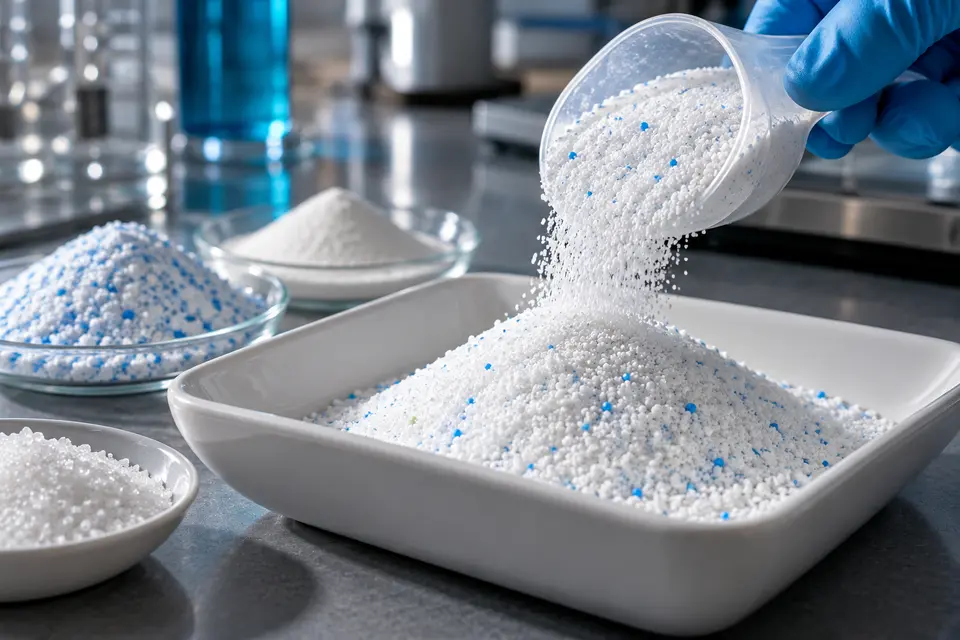 MS CHEM / 02
Powder performance depends on particle distribution, dissolution, moisture and the surfactant system.
Read article MS CHEM / 03
Fragrance is part of product experience but must work with the cleaning base and pack.
Read article