How to evaluate detergent performance
Foam appearance alone does not measure cleaning power; testing should match real use.
Read article
Dishwashing liquid priorities span degreasing, foam, rinsing and usability.
← Back to insights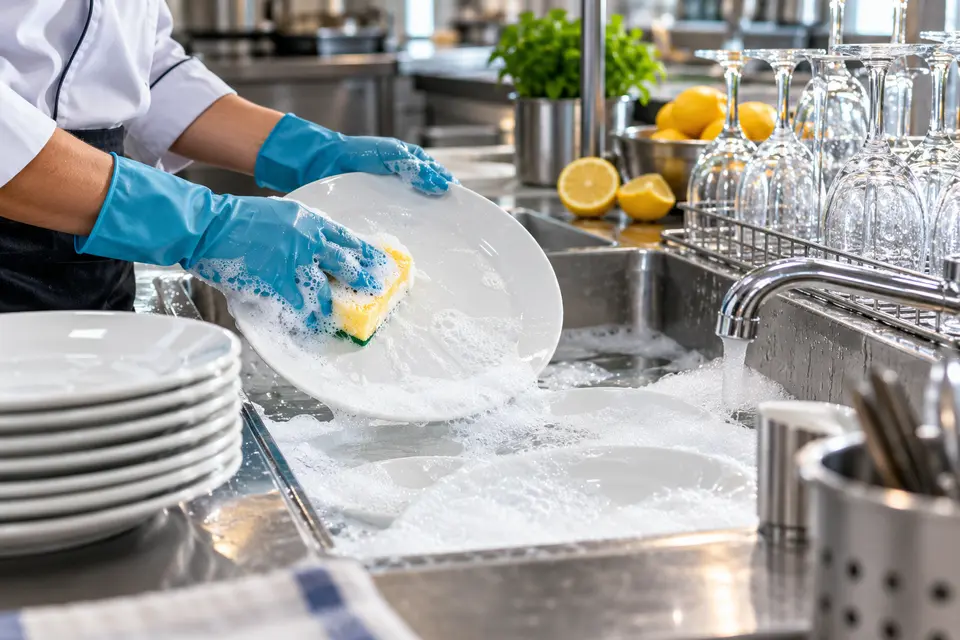
Dishwashing liquid priorities span degreasing, foam, rinsing and usability.
Dishwashing liquids remove fats and food residues through surfactant action, mechanical cleaning and rinsing. Foam shapes the consumer experience but does not directly measure the amount of grease removed; it can collapse when exposed to soil. Water temperature, hardness and food type alter results, so tests should reflect hand dishwashing conditions.
Use similar dishes with comparable soil loading while fixing cleaner dose, water volume and sponge action. Compare grease removal, rinsing and residue after drying; assess foam independently using a suitable procedure. Check viscosity, fragrance stability and dispensing from the cap too. A useful consumer product cannot be reduced to one laboratory metric.
Coat similar dishes with comparable grease loads, then clean them using fixed doses of two candidate formulas and consistent water volume and sponge action. Examine residual grease, rinsing and the dried surface. Conduct separate foam tests with differing water hardness and check how the bottle dispenses. Different rankings for foam and grease removal are not contradictions: each measures a separate property that matters to a complete product decision.
Compare results using representative grease and dishes.
Check performance with different water hardness.
Verify dispensing from the pack.
References for general scientific principles; they do not imply MS CHEM has performed tests or holds certifications.
 MS CHEM / 01
Foam appearance alone does not measure cleaning power; testing should match real use.
Read article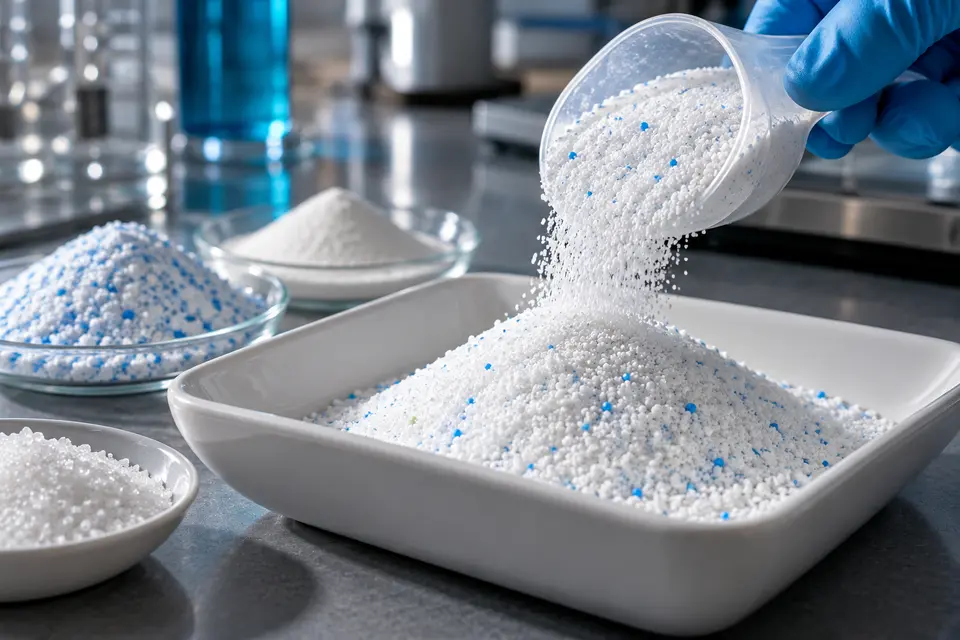 MS CHEM / 02
Powder performance depends on particle distribution, dissolution, moisture and the surfactant system.
Read article MS CHEM / 03
Fragrance is part of product experience but must work with the cleaning base and pack.
Read article