Selecting mixing and filling equipment
Equipment choice depends on viscosity, batch scale, hygiene and maintenance.
Read article
Good records explain batch variation and make troubleshooting easier.
← Back to insights
Good records explain batch variation and make troubleshooting easier.
Batch records connect ingredient lots, actual quantities, addition order, mixing times and critical readings. If two batches differ in texture despite sharing a master formula, these variables can be compared instead of relying on memory. Linking quality results to a batch identifier also supports tracing ingredients across potentially affected products.
Use unique batch IDs, dates and equipment identification, retaining actual measurements and changes. Correct errors in a way that preserves history and maintain appropriate approval and release controls. Trend analysis can reveal recurring raw-material or processing differences, while traceability helps investigate customer complaints without guessing.
If two batches follow the same master formula but differ in viscosity, compare supplier ingredient lots, addition rate, mixing temperature, duration and pH in the records. Test plausible differences in small trials instead of relying on recollection. If a complaint points to one ingredient lot, batch identifiers reveal potentially related products. Documentation thus becomes a diagnosis and traceability tool, not just an administrative archive.
Record ingredient lots and quantities.
Capture addition order, time and measurements.
Link QC results to the batch number.
References for general scientific principles; they do not imply MS CHEM has performed tests or holds certifications.
 MS CHEM / 29
Equipment choice depends on viscosity, batch scale, hygiene and maintenance.
Read article MS CHEM / 33
Structured cleaning between batches reduces contamination and cross-product carryover.
Read article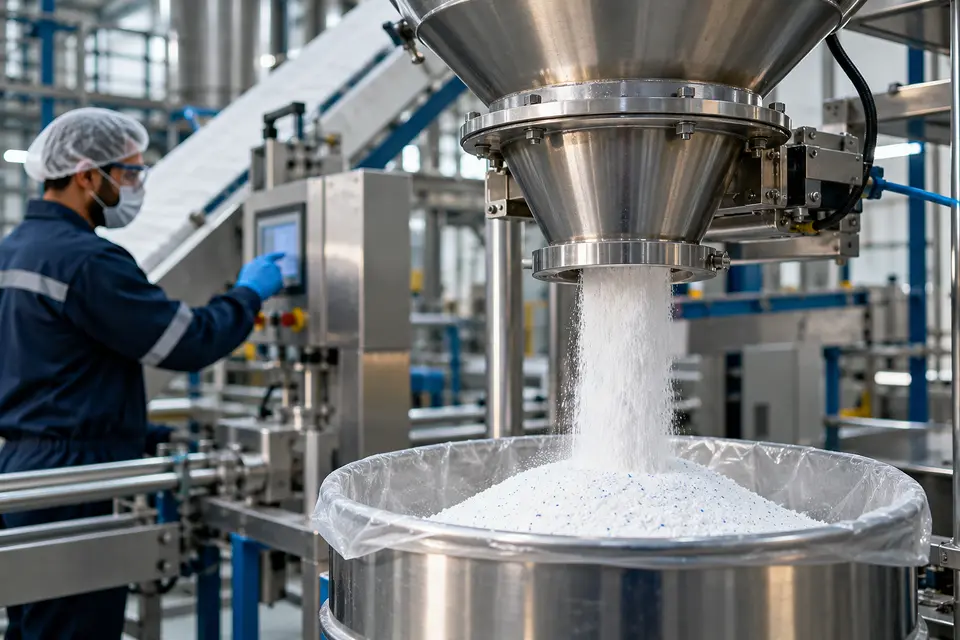 MS CHEM / 34
Humidity, particle size and dust affect processing and workplace safety.
Read article